
What Is Dual Synchronisation and Why Do I Need It?
When an application requires two linear actuators to move the same structure, they must operate together accurately and consistently. Even two actuators with identical specifications may travel at slightly different speeds due to normal differences in motor performance, load distribution and installation conditions.
Dual synchronisation uses actuator feedback and a compatible motor controller to monitor and adjust the movement of both actuators. This helps keep them aligned, distribute the load more evenly and reduce the risk of twisting, binding or damaging the application.
More than likely, you won’t often find yourself in a position where you require more than one actuator, but if your application does require two actuators (due to things like a need for excess force, or mitigating sideways movement), you need to ensure that the two actuators are synchronised.
What is motor synchronisation?
Motor synchronisation is the process of controlling two or more electric motors so that their connected linear actuators extend and retract together. A synchronised system continually compares actuator movement and makes small adjustments to maintain coordinated motion.
Slight variation between the actuator productions results in them operating at slightly different speeds; this can have a number of negative impacts on both the application and actuator.
Motor synchronisation keeps actuators moving at the exact same speed. This allows you a high level of control, and ensures equal load distribution. In turn, synchronisation protects the actuator and the application.
Without synchronisation, one actuator may move ahead of the other. This difference can cause the lifted structure to become uneven and place additional stress on the actuators, mounting brackets and surrounding components.
Why Do Two Linear Actuators Move at Different Speeds?
Two actuators of the same model will not necessarily move at precisely the same speed when connected to a standard power supply. Small differences can be caused by:
- Manufacturing tolerances within the motors and internal components
- Uneven weight or load distribution
- Differences in friction or mounting alignment
- Variations in the supplied voltage
- Different cable lengths or electrical resistance
- Changes in operating temperature
- Wear that develops over time
These differences may appear minor during a short movement. However, the misalignment can become more noticeable across repeated operating cycles or longer stroke lengths.
Simply connecting two actuators to the same switch does not guarantee synchronised movement. A suitable feedback system and synchronised motor controller are generally required.
How does synchronisation work?
Synchronisation is achieved through the use of a Hall Effect Sensor. The “Hall Effect” occurs when a voltage difference is created in the conductor through the application of a magnetic field perpendicular electric current flow.
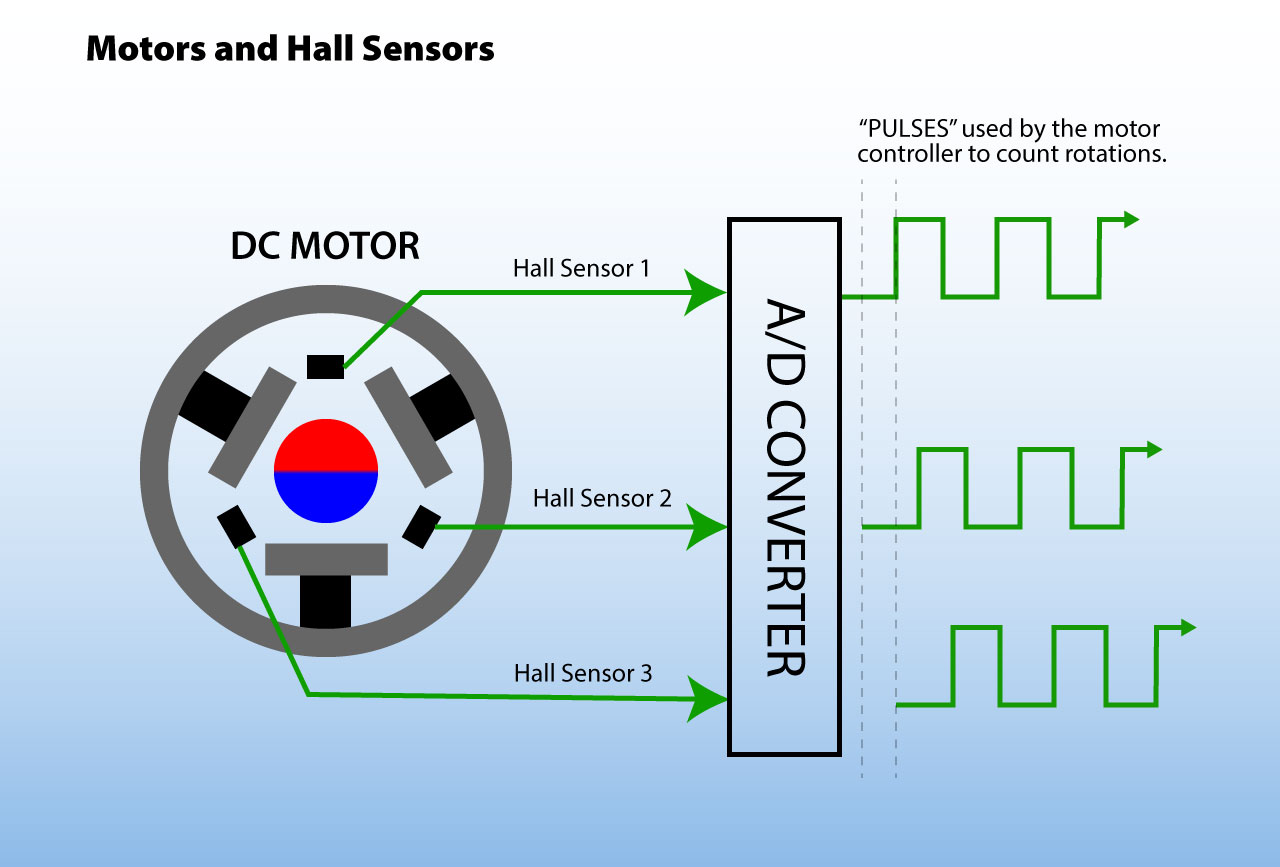
The voltage difference can be measured with a Hall Effect Sensor, which outputs a series of “pulses” that translate to the rate at which the motor is spinning. Next, the pulses are read by a dual synchronised motor controller, which distributes variable voltages between the actuators to ensure they are traveling at the same rate.
In practical terms, the Hall Effect Sensor allows the controller to monitor the position and movement of each actuator. If one actuator begins moving faster than the other, the controller can adjust its output to bring the actuators back into alignment.
This closed-loop control helps provide smoother, safer and more predictable movement than operating two standard actuators from a basic switch or power source.
What Is Required to Synchronise Two Linear Actuators?
A dual synchronised actuator system will generally require:
- Two compatible linear actuators with Hall Effect feedback
- A dual synchronised motor controller
- A suitable power supply
- Correctly rated wiring and connectors
- Appropriate mounting brackets
- A compatible control method, such as a switch, remote control or mobile application
- Correct load calculations and mechanical alignment
The two actuators should normally have matching stroke lengths, speeds, voltage requirements, load ratings and feedback configurations. Using unmatched actuators can make reliable synchronisation difficult or unsuitable.
The controller must also support the combined electrical demand of both actuators. Check the actuator and controller specifications before assembling the system.
When should you use synchronisation?
There are three main situations in which you should use a Hall Effect Sensor.
-
Extra force
One common reason you may need to utilise synchronisation is that you require more force than a single actuator is capable of producing.
For example, if you need to lift a 180 kg object but you only have 100 kg actuators, you can use dual synchronisation to achieve a combined force of 200 kg.
The available lifting capacity will depend on the complete system, including load distribution, mounting geometry, actuator orientation and safety requirements. The load should be distributed appropriately across both actuators, and a suitable safety margin should be included when selecting the system.
-
Stabilisation
If not for extra force, you’ll likely turn to synchronisation for added stability. When mounting on two sides of an object, synchronisation removes any concern over side-force on the actuator.
For example, if you need to open a large window, the most effective method is to mount the actuators to the sides; both actuators must work in synchronisation to ensure there’s no flex or side movement to the glass.
Synchronised actuators can also support wide, long or uneven structures that may become unstable if operated from only one side. Maintaining coordinated movement helps reduce twisting and uneven loading.
-
Electronic limits and fine motor control
On single actuator applications, Hall Sensors can impose electronic limit-ends with specific motor controllers.
For example, if your application requires 130 mm but you only have 150 mm actuators available, you can program controllers (such as TH717) to stop the actuator at a specific location (measured in pulses), or even default the actuator to a location along its complete stroke length.
Common Dual Actuator Synchronisation Problems
A correctly selected system can still experience problems if its components are installed or configured incorrectly. Common causes include:
- Uneven load distribution
- Poorly aligned mounting points
- Incorrect wiring
- Incompatible actuators
- Insufficient power supply capacity
- Incorrect controller configuration
- Obstructions within the application
- Damaged Hall Effect Sensor wiring
- Excessive side loading
- Operating beyond the actuator’s rated duty cycle
If the actuators regularly become misaligned, stop operating the system and check the mechanical installation, wiring, power supply and controller settings. Continuing to operate an uneven system may place additional stress on its components.
Does your application require synchronisation or hall sensing capabilities?
If you’re convinced that your application calls for synchronisation or hall sensing, TecHome’s TH717+ Smart Controller is the solution you need.
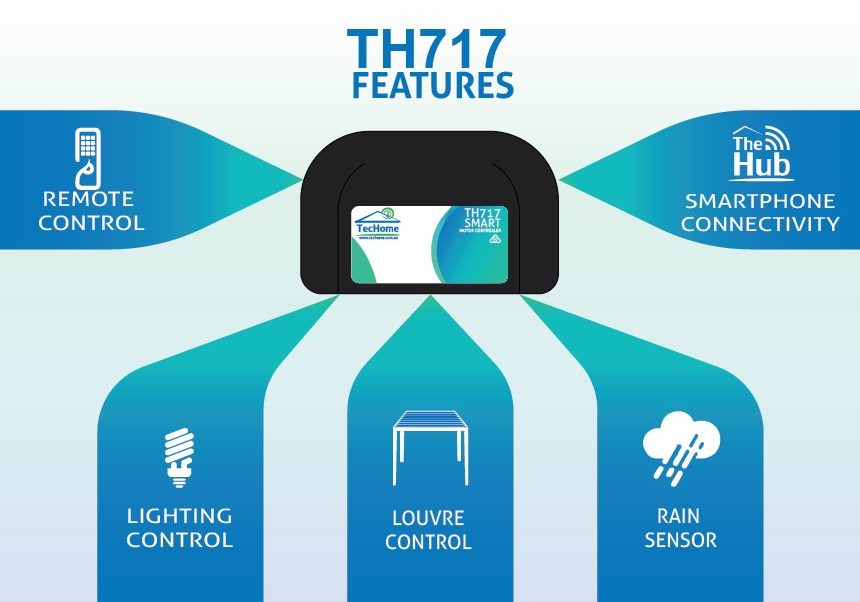
The TH717+ is TecHome’s latest and most advanced motor controller available; it’s capable of synchronisation, hall sensing control, RF remote, and Bluetooth control.
Looking for more information on the TH717+ or just want some extra insight about whether or not your application requires synchronisation? Get in touch with TecHome today!
- Mar 2019
- Jun 2019
- Jul 2019
- Oct 2019
- Feb 2020
- Mar 2021
- Jul 2021
- Sep 2021
- Oct 2021
- Nov 2021
- Jan 2022
- Feb 2022
- Mar 2022
- Apr 2022
- May 2022
- Jul 2022
- Sep 2022
- Oct 2022
- Nov 2022
- Dec 2022
- Jan 2023
- Feb 2023
- Mar 2023
- Apr 2023
- May 2023
- Jun 2023
- Aug 2023
- Oct 2023
- Jan 2024
- Feb 2024
- Apr 2024
- May 2024
- Jun 2024
- Jul 2024
- Aug 2024
- Sep 2024
- Oct 2024
- Sep 2026